Refrigerator Repair in Greater Seattle
FridgeRepair.pro sends refrigeration technicians to homes across Greater Seattle to repair refrigerators of every common style and brand. We test the unit on site, find the failed part, give you a written quote, and install OEM parts once you approve.
- $149 diagnostic, credited to the repair
- Licensed, trained & insured
- Parts & labor warranty
- OEM parts
- Mon–Sun, 8 AM – 8 PM
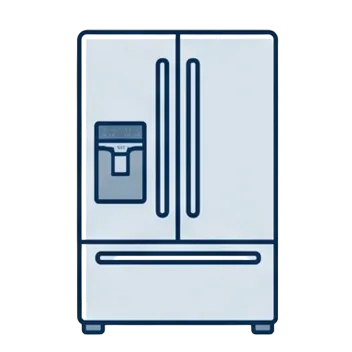
Common refrigerator problems we fix
- Fresh-food section warm, freezer still cold. Usually airflow. Most refrigerators make their cold in the freezer and blow part of it into the fresh-food side, so a stalled evaporator fan, a coil packed with frost after a defrost failure, or a damper stuck shut warms the refrigerator first.
- Both sections warm, compressor clicking or running nonstop. Points to the cooling system: a dust-clogged condenser or dead condenser fan, a failed start relay or overload (a click every few minutes), an inverter board fault, or on older units a refrigerant leak or worn compressor.
- Frost on the freezer back wall or ice on the freezer floor. A defrost problem. The heater may be open, the defrost thermostat or sensor may have failed, or the control may never start the cycle. A sheet of ice on the freezer floor often means the defrost drain froze shut.
- Water under the crisper drawers or on the floor. Inside, it is almost always a blocked or frozen defrost drain. On the floor, we look at the supply line, the inlet valve, the filter housing and the drain pan under the cabinet.
- Chirping, buzzing or grinding that changes when a door opens. On many models the evaporator fan stops when the freezer door opens, so a noise that cuts out with the door open usually means worn fan bearings or a blade striking ice. A noise from the bottom rear points to the condenser fan or compressor.
- Milk and lettuce freezing in the fresh-food section. A damper stuck open, a temperature sensor reading warmer than reality, or a control set too cold. Produce freezing only near the back-wall vent is often a loading issue, not a fault.
- Sweating on the outside or between French doors. The heater in the center flipper flap or the cabinet anti-sweat heaters may have failed, or a door gasket is letting humid kitchen air in. Frost on the inside near the same spot confirms a seal problem.
- Dispenser slow, ice maker quiet. Often a clogged water filter, low household pressure, a frozen line in the door, or a failing water inlet valve. We test pressure and flow at the valve before replacing anything.
Most refrigerator repair calls come down to one of five things: the sealed refrigeration system, the fans and dampers that move cold air, the defrost cycle, the water and ice parts, or the electronic controls. We repair all of them in homes across Greater Seattle, on top-freezer, bottom-freezer, French-door, side-by-side and counter-depth models. The technician tests the unit, names the failed part, and gives you a written quote before any work begins.
Refrigerators rarely fail all at once. There are usually warning signs for days or weeks first: a freezer that frosts up, a fan that starts chirping, a little water under a crisper drawer. Knowing which system is involved makes the visit shorter and the repair more likely to be done in one trip.
How a refrigerator makes cold, and where it breaks
The sealed system
The compressor pumps refrigerant around a closed loop. Hot, high-pressure gas gives up its heat in the condenser coil, which on most current models sits under the cabinet with a small fan pulling room air across it. The refrigerant then passes through a narrow capillary tube into the evaporator, a coil hidden behind the freezer’s rear panel, where it boils and soaks up heat from the air around it.
When this loop has trouble, both compartments warm up together. The causes range from simple to serious. A condenser blanketed in dust, or a condenser fan that has seized, makes the compressor run hot and long. A failed start relay or overload produces a click every few minutes as the compressor tries to start and gives up. A refrigerant leak or a blocked capillary tube shows up as frost that covers only part of the evaporator.
Many newer refrigerators use variable-speed compressors driven by their own inverter board. They are quieter and more efficient, but a no-cooling fault can sit in the board, the wiring or the compressor, and telling those apart takes meter readings rather than guesswork. Any sealed-system or refrigerant work goes to our EPA Section 608-certified technicians, who bring proper recovery equipment.
Fans and dampers
In a single-evaporator refrigerator, all the cold is made in the freezer. The evaporator fan blows air across the coil, and a damper (sometimes called an air door) meters part of that air through a duct into the fresh-food section. That is why the refrigerator side warms first when airflow fails while the freezer still feels cold to the hand.
A fan motor with worn bearings usually announces itself with a chirp or squeal. A fan blade can also freeze in place when ice builds up on the coil behind it. Dampers fail in one of two ways: stuck open, which freezes milk and lettuce, or stuck closed, which starves the fresh-food side.
Some refrigerators, including many French-door models, have a second evaporator and fan for the fresh-food compartment. On those, a warm refrigerator points to its own fan, sensor or defrost parts instead of the freezer.
The defrost cycle
A frost-free refrigerator periodically shuts off the compressor and turns on a heater mounted under or behind the evaporator to melt the frost that collects there. A thermostat or temperature sensor ends the cycle, and the meltwater runs down a drain to a pan near the compressor, where condenser heat evaporates it.
If the heater burns out, the sensor fails, or the control never starts the cycle, frost keeps building until it blocks the coil. The decline is gradual: over a week or two the fresh-food side warms, ice cream softens, and a white wall of frost grows behind the freezer panel. If the drain freezes instead, the water has nowhere to go and either turns to ice on the freezer floor or drips into the fresh-food section under the crispers.
Water and ice parts
Refrigerators with a dispenser have an electric water inlet valve at the back, a filter, tubing to the dispenser and the ice maker, and on many French-door models a water line that runs up through the door hinge. A valve that does not close fully can trickle into the ice maker and freeze the fill tube solid. A clogged filter or low household pressure slows the dispenser and shrinks the cubes. Our ice maker repair page covers these faults in more depth.
Controls and sensors
Small temperature sensors called thermistors tell the main control board what each compartment is doing. A sensor that drifts out of range gives the board bad information, and the board then makes sensible decisions based on it. Boards fail too, sometimes after a power surge, and their relays are what switch the compressor, fans and heaters. If your display is flashing or showing a code, take a photo of it before you call.
What we check during a refrigerator repair visit
We work through a refrigerator in a set order, because cheap and common faults often hide behind a symptom that sounds expensive.
- Your description and the history. When it started, what changed, any codes, a recent move, a power outage, a new water filter.
- Real temperatures. We measure both compartments and the air coming out of the vents, not just what the display claims.
- The machine compartment. Condenser coil condition, condenser fan, whether the compressor is running or cycling, and how hot each part is.
- The evaporator. When the symptoms call for it, we remove the freezer’s rear panel and look at the frost pattern, the fan and the defrost parts. The frost pattern alone often separates a defrost fault from a refrigerant problem.
- Electrical tests. Heater and sensor resistance, fan and valve operation, board outputs, and the built-in diagnostic mode on models that have one.
- Seals, doors and drains. Gasket condition, door alignment, the drain path and the drain pan.
Once we know the cause, we explain it, show you the failed part where we can, and write up the quote. If the part is not on hand, we order it and book a return visit.
Refrigerator styles we work on
| Style | What tends to need attention |
|---|---|
| Top-freezer | Simple and long-lived; defrost parts, fans and the damper control |
| Bottom-freezer | Freezer drawer slides and gaskets, defrost drains, fresh-food airflow |
| French door | Ice makers in the fresh-food door, the center flipper flap heater, dual evaporators on some models |
| Side-by-side | The narrow freezer frosts up quickly; dispenser and ice maker faults are common |
| Counter-depth | Tight installs restrict airflow around the condenser, so clearances get checked first |
A freestanding counter-depth model is not the same thing as a true built-in, which is designed to sit flush in cabinetry and has its own service needs. If your refrigerator has custom panels or a grille above the doors, our built-in refrigerator repair page is the better guide.
Repair or replace: rules of thumb we use
We would rather tell you a repair is not worth doing than sell you one you will regret. These are the guidelines our technicians actually apply:
- Fans, defrost parts, sensors, valves, gaskets and most control boards are worth replacing on almost any refrigerator that is otherwise sound. This is the bulk of what we fix.
- Sealed-system repairs take more labor and materials, because the system has to be opened, brazed, evacuated and recharged. On a standard freestanding refrigerator past about 10 years old, that often costs too large a share of a new one, and we will say so.
- Condition matters more than age. A clean, well-kept 12-year-old top-freezer can outlast a neglected five-year-old French door.
- Parts availability is a hard limit. On some older or less common models, a discontinued control board ends the conversation.
A useful test: if the quote is more than about half the price of a comparable new refrigerator and yours is in the second half of its working life, replacement usually makes more sense. The written quote gives you a real number to compare.
Simple care you can do safely
- Clean the condenser coil once or twice a year. Unplug the refrigerator, remove the toe grille at the bottom front (or the rear access cover on some models), and vacuum the coil with a brush attachment. Homes with shedding pets may need to do it more often.
- Test the door gaskets. Close the door on a dollar bill at several points around the seal. If it slides out with no drag, that section is not sealing. Clean gaskets with warm soapy water, since sticky residue can tear them.
- Keep the vents clear. Inside, keep food away from the air outlets on the back wall. Outside, leave the gap the installation manual asks for.
- Change the water filter on schedule. An overdue filter slows the dispenser and the ice maker.
- Write down what you see. A photo of the display and a note of when the problem started save real time on the visit.
Leave the area behind the freezer panel, the compressor compartment and the control board to a technician. Those parts carry line voltage and sharp sheet-metal edges, and the sealed system holds refrigerant under pressure.
A note on Puget Sound homes
Two local conditions show up often in refrigerator calls here. Many homes in the region were built without air conditioning, so a hot spell pushes the kitchen well above normal and the condenser has to work much harder. The June 2021 heat dome made the point: a refrigerator with a dusty coil that copes fine at 70 degrees can fall behind when the room is 90.
The other is the garage refrigerator in winter. Most refrigerators use one temperature control located in the fresh-food section. When an unheated garage gets cold, that section barely calls for cooling, the compressor rarely runs, and the freezer drifts warm even though the room is chilly. Check your manual for the minimum room temperature before relying on a garage refrigerator through a Puget Sound winter.
Repairs we handle
- Evaporator and condenser fan motor replacement
- Defrost heater, thermostat and sensor replacement
- Defrost drain clearing and drain heater repair
- Main control board and inverter board replacement
- Thermistor and temperature sensor replacement
- Start relay, overload and capacitor replacement
- Air damper and damper motor replacement
- Water inlet valve and supply line repair
- Door gasket replacement and door alignment
- Ice maker and dispenser repair
- Sealed-system leak repair, compressor replacement and recharge
Troubleshooting guides
- Refrigerator door gasket replacement: test, fix or replace
- Refrigerator leaking water: how to find where it's coming from
- Refrigerator making noise: which sounds are normal and which aren't
- Refrigerator not cooling: what to check before you call
- Refrigerator stopped working: what to do in the first hour
- Repair or replace your refrigerator: how to decide
How a repair visit works
Call or send a request
We reply within one business hour. We ask what the appliance is doing, the brand and, if handy, the model number from the label inside the door.
Diagnosis in your home
A technician tests the system and finds the actual fault. The visit is $149.
Written quote first
You get the price before any work starts. Go ahead and the $149 is credited toward the repair.
Repair with OEM parts
Common parts are often on the truck. If one has to be ordered, we book the return visit when it arrives. Parts and labor are covered by our warranty.
Brand-specific refrigerator repair
- Bosch refrigerator repair
- Café refrigerator repair
- Dacor refrigerator repair
- Electrolux refrigerator repair
- Fisher & Paykel refrigerator repair
- Frigidaire refrigerator repair
- GE refrigerator repair
- GE Profile refrigerator repair
- JennAir refrigerator repair
- Kenmore refrigerator repair
- KitchenAid refrigerator repair
- LG refrigerator repair
- Liebherr refrigerator repair
- Maytag refrigerator repair
- Perlick refrigerator repair
- Samsung refrigerator repair
- True Residential refrigerator repair
- U-Line refrigerator repair
- Whirlpool refrigerator repair
Refrigerator brands we repair
 Admiral
 AGA
 Amana
 Arctic King
 Ariston
 ASKO
 Beko
 Bertazzoni
 Big Chill
 BlueStar
 Bosch
 Café
 Capital Cooking
 Dacor
 DCS
 Electrolux
 Fisher & Paykel
 Forno
 Frigidaire
 GE
 GE Profile
 Hestan
 Hotpoint
 JennAir
 Kenmore
 Kenmore Elite
 KitchenAid
 LG
 LG Studio
 Liebherr
 Maytag
 Monogram
 Perlick
 Samsung
 Samsung Bespoke
 Signature Kitchen Suite
 Smeg
 Thermador
 Thor Kitchen
 True Residential
 U-Line
 Viking
 Whirlpool
Refrigerator repair service area
We cover these cities and the neighborhoods around them.
Refrigerator repair FAQ
Why is my refrigerator warm when the freezer is fine?
Most refrigerators make all their cold in the freezer and blow some of it into the fresh-food side, so an airflow problem warms the refrigerator first. A stuck evaporator fan, a coil choked with frost after a defrost failure, or a damper stuck closed are the usual causes. With the freezer door open, press the door switch and listen. If you hear no fan, mention that when you call.
How long is food safe after a refrigerator stops cooling?
USDA guidance is that a closed refrigerator keeps food safe for about four hours. A full freezer holds for about 48 hours and a half-full one for about 24, again with the door kept shut. Perishables that have sat above 40°F for more than two hours should be thrown out. A cheap appliance thermometer tells you more than the display does.
Is it worth repairing a 10-year-old refrigerator?
Often it is, when the fault is a fan, a defrost part, a sensor, a water valve or a control board. Those are moderate repairs on a cabinet that may have years left. A sealed-system failure is a harder call on a standard freestanding refrigerator of that age, and we will tell you plainly when we think the money is better spent on a new unit.
Should I unplug the refrigerator before the technician arrives?
Leave it running unless it is leaking toward an outlet, smells hot, or keeps tripping the breaker. A running unit lets us hear the fans, measure temperatures and read the frost pattern on the evaporator, which tells us a lot. If you have already emptied it and let it defrost, say so when you book, because a full thaw can hide a defrost fault for a day or two.
Do you repair French-door, side-by-side and counter-depth models?
We do, along with top-freezer and bottom-freezer refrigerators. The cooling principles are the same, but each style has its own weak spots, such as door-mounted ice makers on French-door models and fast frost buildup in narrow side-by-side freezers. Give us the model number when you call so the technician can check parts availability before the visit.
Other cold appliances we fix
Built-In Refrigerator repair
Full-size built-ins, columns, undercounter and panel-ready units.
Freezer repair
Upright, chest and column freezers, including garage units.
Ice Maker repair
Refrigerator ice makers and standalone undercounter machines.
Wine Cooler repair
Single and dual-zone wine storage, built-in or freestanding.
Request a repair visit
Tell us what's going on and we'll call or text you within one business hour (Mon–Sun, 8 AM–8 PM) to set up a time. In a hurry? Call (206) 350-0055 or send a text.
Warm fridge? Let’s get it looked at.
We answer the phone Mon–Sun, 8 AM – 8 PM. Same-day visits are often possible when you call early.