Built-In Refrigerator Repair in Greater Seattle
We repair built-in refrigerators, refrigerator and freezer columns, undercounter units and panel-ready models in homes across Greater Seattle. Our technicians diagnose in place, protect your cabinetry and floors, and quote in writing before any part is ordered.
- $149 diagnostic, credited to the repair
- Licensed, trained & insured
- Parts & labor warranty
- OEM parts
- Mon–Sun, 8 AM – 8 PM
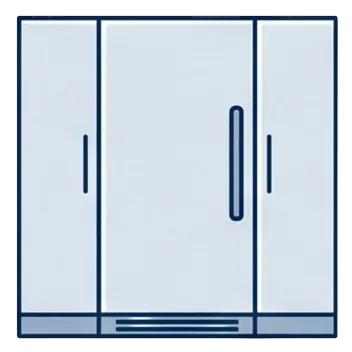
Common built-in refrigerator problems we fix
- One compartment warm, the other perfectly normal. Many built-ins cool the refrigerator and freezer with separate evaporators, and some with separate compressors. A warm side points to that side's own fan, sensor, defrost parts or sealed circuit, not to the whole unit.
- Compressor running long, top grille area hot. Units with the machinery above the doors pull kitchen air through a condenser behind the grille. Dust and cooking grease coat that coil over the years, and a slow or failed condenser fan makes the compressor work much harder.
- Panel door sagging, not closing on its own. Custom panels add real weight to the door. Worn hinges, door closers or hinge cams let the door drop out of line, and the gasket stops sealing at the top or latch-side corner.
- Frost or condensation along one edge of the door. Usually a gasket that has torn, hardened or lost contact because the door has shifted. Warm, damp air leaking in at one corner forms frost inside and sweat outside along the same line.
- Display dark, error message, or controls unresponsive. A failed control board, user-interface board, a wiring connection between boards, or a power supply fault. Note any message exactly as shown, since many premium units store a fault history we can read.
- Undercounter unit warm in summer, fine in winter. Undercounter refrigerators breathe through the toe-kick grille. Blocked vents, a failing condenser fan or a dirty coil may only show up when the kitchen is warm.
- Ice maker in the freezer quit or overfills. The same culprits as any ice maker: inlet valve, frozen fill tube, module or bin sensor. On built-ins the valve is often reached from the top or bottom grille rather than the back.
Built-in refrigerator repair is a different job from fixing a freestanding refrigerator. A built-in is fitted into cabinetry, often wears custom panels, weighs several hundred pounds, and in many designs uses separate cooling for the refrigerator and freezer sections. We service 36, 42 and 48-inch built-ins, refrigerator and freezer columns, undercounter refrigerators and drawers, and panel-ready integrated models across Greater Seattle, and we work on them in place without damaging the kitchen around them.
The owners of these units have usually paid a good deal for them and expect them to last 20 years or more. A well-built unit can, provided the routine failures get fixed properly when they come up.
What makes a built-in refrigerator different
Where the machinery lives
On many classic built-ins, the compressor, condenser and condenser fan sit in a compartment above the doors, behind a hinged or removable grille. Others put the machinery at the bottom behind the toe-kick. Either way, the condenser draws air from the front of the unit, because the back and sides are boxed in by cabinets.
That front-breathing design is why grille and toe-kick vents matter so much. Kitchen air carries dust, pet hair and a fine film of cooking grease, and over years it coats a top-mounted condenser into a felt mat. The compressor then runs long and hot, and the first warning is often a warm fresh-food section on a summer evening.
Separate cooling for each compartment
Many premium built-ins give the refrigerator and freezer their own evaporators, and some go further with two complete sealed systems. The fresh-food side stays more humid because it never shares dry freezer air, which is good for produce. It also changes how we diagnose: a warm refrigerator with a normal freezer points to that compartment’s own fan, sensor, defrost heater or refrigerant circuit.
Refrigerator and freezer columns take this to its conclusion. Each column is a stand-alone appliance with its own compressor and controls, installed next to its partner. One failing column tells us nothing about the other.
Doors, hinges and panels
A panel-ready door can carry a heavy wood or stainless panel on top of its own weight. Built-ins use stronger hinges, often with closers that pull the door shut from partway open. These wear. A door that no longer swings closed by itself, rubs the adjacent cabinet or sits lower at the handle side is telling you the hinge or closer needs attention, usually before the gasket starts leaking.
Electronics
Most current built-ins run on a main control board linked to a separate display or user-interface board, with several sensors in each compartment. Many have a service mode that shows live sensor readings and stored fault history. We read that first, because it can point straight at a failed sensor or a fan that the board has given up on.
Built-in configurations we service
- 36, 42 and 48-inch built-ins. Side-by-side, over-and-under and French-door layouts, with the machinery on top or at the bottom.
- Refrigerator and freezer columns. Single full-height units, alone or paired, including freezer columns with ice makers.
- Undercounter refrigerators and refrigerator drawers. These depend entirely on the toe-kick vent for cooling. Drawer models add slides and drawer gaskets to the list of wear items.
- Panel-ready and fully integrated models. The appliance disappears into the cabinetry, which means panel weight, mounting brackets and clearance to neighboring doors all affect how well it seals.
If you have a wine column in the same run of cabinets, our wine cooler repair page covers what is different about those.
How a built-in service visit runs
Before we arrive, we ask for the model and serial numbers so the technician can check parts and service information. On site, the order is roughly this:
- Protect the kitchen. Floor protection goes down in front of the unit, and panels and trim are handled with care.
- Read the unit’s own diagnostics. Fault history, sensor readings and run status from the service mode, where the model offers one.
- Measure each compartment separately. Actual air temperatures against setpoints, refrigerator and freezer independently.
- Open the machine compartment. Condenser condition, condenser fan, compressor operation, and the temperatures of the lines.
- Inspect the evaporator on the affected side. Frost pattern, fan, defrost heater and drain.
- Check doors and seals. Hinge and closer wear, door alignment, gasket contact all the way around.
If the repair means rolling the unit out of its opening, we explain why and agree on it with you first. That involves shutting off the water, releasing the anti-tip bracket, protecting the flooring under the wheels and planning enough time to reinstall and level the unit properly.
The repairs we do most on built-ins
Condenser fans and evaporator fans top the list, followed by defrost heaters and sensors. Door hardware is next: hinge closers, cams and gaskets, especially on heavy panel-ready doors in busy kitchens. Water valves and ice makers fail on built-ins about as often as on any refrigerator, though reaching them takes a bit more work.
Sealed-system repairs are less common but come up on older units. On a well-built refrigerator they are normally worth doing, and they need to be done to the standard the system was built to, with proper brazing, evacuation and a measured charge.
Repair or replace a built-in
The economics favor repair more strongly than with freestanding refrigerators. Replacing a built-in means matching an exact cutout width, height and depth, ordering new panels, and sometimes rebuilding cabinetry when another brand’s dimensions differ. A repair that would be a poor bet on a basic refrigerator often makes sense here.
There are still cases where we will recommend replacing. A discontinued control board with no available substitute, rust through the inner liner, or several major systems failing in the same year all change the picture. When that is where things stand, you get our reasons in writing alongside the quote.
Looking after a built-in
- Clean the condenser yearly. Turn the unit off at its control or the breaker, open the top grille or remove the toe-kick as your manual describes, and vacuum the coil gently with a soft brush. Do not bend the fins.
- Keep vents open. Undercounter units in particular need a clear toe-kick. A rug, a trim board added during a remodel, or a pet bed in front of the grille can be enough to overheat one.
- Watch the doors. Open each door partway and let go. If it no longer closes on its own, have the hinges and closers checked before the gasket wears unevenly.
- Change filters as scheduled. That includes the water filter and, on units that have one, the air filter.
- Avoid hanging on doors. Children swinging on a heavy panel door is a quick way to bend a hinge.
If you are remodeling around a built-in
Kitchen remodels are hard on built-ins. Drywall and sawdust load up condensers fast, and new cabinetry or trim sometimes ends up blocking a vent or changing the opening by a fraction of an inch. If the unit stays through a remodel, cover the grille while dust is flying, have the condenser cleaned afterward, and make sure the finished opening still matches the installation dimensions.
Repairs we handle
- Condenser and evaporator fan motor replacement
- Condenser cleaning behind top grilles and toe-kicks
- Defrost heater and sensor replacement
- Control board, display and wiring repair
- Temperature sensor replacement and calibration checks
- Door hinge, closer and alignment repair
- Magnetic door gasket replacement
- Water valve, filter housing and ice maker repair
- Drain and drain pan repair
- Sealed-system leak repair and compressor replacement
- Careful pull-out and reinstallation from cabinetry when access requires it
Troubleshooting guides
How a repair visit works
Call or send a request
We reply within one business hour. We ask what the appliance is doing, the brand and, if handy, the model number from the label inside the door.
Diagnosis in your home
A technician tests the system and finds the actual fault. The visit is $149.
Written quote first
You get the price before any work starts. Go ahead and the $149 is credited toward the repair.
Repair with OEM parts
Common parts are often on the truck. If one has to be ordered, we book the return visit when it arrives. Parts and labor are covered by our warranty.
Brand-specific built-in refrigerator repair
- Bosch built-in refrigerator repair
- Dacor built-in refrigerator repair
- Fisher & Paykel built-in refrigerator repair
- Gaggenau built-in refrigerator repair
- JennAir built-in refrigerator repair
- KitchenAid built-in refrigerator repair
- Liebherr built-in refrigerator repair
- Miele built-in refrigerator repair
- Monogram built-in refrigerator repair
- Signature Kitchen Suite built-in refrigerator repair
- Sub-Zero built-in refrigerator repair
- Thermador built-in refrigerator repair
- Viking built-in refrigerator repair
Built-In Refrigerator brands we repair



















Built-In Refrigerator repair service area
We cover these cities and the neighborhoods around them.
Built-In Refrigerator repair FAQ
Do you have to pull a built-in refrigerator out of the cabinets to repair it?
Most repairs do not require it. On many built-ins the compressor, condenser, fans and controls are reached through the top grille or the toe-kick, and evaporator work happens from inside the cabinet. Some sealed-system repairs and some water leaks do need the unit rolled forward. We tell you in advance, protect the floor, and plan the visit around it.
Is a sealed-system repair worth it on a high-end built-in?
On most built-ins it is. The cabinet and components are built to be serviced, and replacing the unit often means matching an exact cutout, reordering custom panels and sometimes changing cabinetry. Exceptions exist, such as a discontinued control on an old unit or several systems failing at once, and we will lay those out if they apply.
Why is only my freezer column warm when the refrigerator column is fine?
Columns are completely independent appliances that happen to stand side by side. Each has its own compressor, condenser, evaporator, fans and controls, so one column failing says nothing about the other. Diagnosis on a column starts from scratch with that unit's own machine compartment and evaporator.
What should I have ready before a built-in service visit?
The model and serial numbers help most. On many built-ins the rating label is inside the refrigerator compartment, often on a side wall or the ceiling, or behind the top grille. A clear path to the unit, access to the water shutoff, and a note of any messages on the display also make the visit faster.
Other cold appliances we fix
Refrigerator repair
French door, side-by-side, top and bottom freezer, counter-depth.
Freezer repair
Upright, chest and column freezers, including garage units.
Ice Maker repair
Refrigerator ice makers and standalone undercounter machines.
Wine Cooler repair
Single and dual-zone wine storage, built-in or freestanding.
Request a repair visit
Tell us what's going on and we'll call or text you within one business hour (Mon–Sun, 8 AM–8 PM) to set up a time. In a hurry? Call (206) 350-0055 or send a text.
Warm fridge? Let’s get it looked at.
We answer the phone Mon–Sun, 8 AM – 8 PM. Same-day visits are often possible when you call early.