JennAir Built-In Refrigerator Repair
We diagnose and repair JennAir built-in refrigerators, including built-in side-by-sides, bottom-freezers and column units. Most problems trace back to condenser airflow, the defrost system, a fan or the electronic controls, and those repairs are usually worth doing on a built-in.
- $149 diagnostic, credited to the repair
- Licensed, trained & insured
- Parts & labor warranty
- OEM parts
- Mon–Sun, 8 AM – 8 PM
Independent service by Appliance Repair Pros. Not affiliated with, authorized by, or endorsed by JennAir.
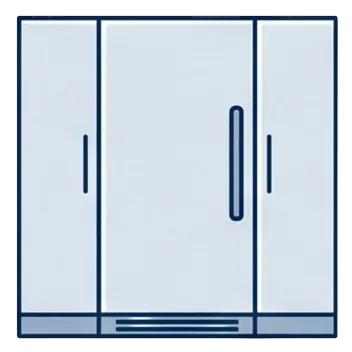
JennAir built-in refrigerator problems we see
- Both sections creeping warm on a top-machinery model. On built-ins with the sealed system at the top, the condenser sits behind the grille above the doors. When it packs with dust and kitchen grease, the compressor runs long and both compartments drift a few degrees warm.
- Rattle or whine from above the doors. Noise that seems to come from the top of the unit usually points to the condenser fan motor or a loose shroud in the machine compartment. A fan that has slowed down also makes the cabinet run warmer.
- Fresh-food side warm, freezer still cold. This pattern usually means the evaporator has frosted over or its fan has stopped. The freezer holds temperature for a while, but the air that feeds the fresh-food side gets choked off.
- Doors that sweat, frost or set off the alarm. Custom overlay panels add weight, and hinges can drift out of adjustment over years of use. A door that sits slightly out of plane won't press its gasket evenly.
- Ice maker stops in the freezer or freezer column. Common causes are a failing water inlet valve, a frozen fill tube or a worn ice maker module. A water line kinked behind the cabinet during installation shows up here too.
- Display lights up but nothing cools. Before blaming a control board, we rule out a showroom or demo setting, door switches and temperature sensors. Each can make a healthy unit look dead.
We diagnose a JennAir built-in with the cabinet still in place whenever the problem allows. Most JennAir built-in refrigerator repair comes down to how well the unit breathes, whether the defrost system keeps the evaporator clear, and whether the electronic controls are reading the cabinet correctly. We work on JennAir built-in side-by-sides, bottom-freezers, French-door models and column pairs.
How JennAir built-ins differ from freestanding refrigerators
A built-in sits flush with the cabinetry and is anchored to it, which changes where the heat goes. On many JennAir built-in side-by-side and bottom-freezer models, the compressor and condenser live at the top of the unit, behind the grille above the doors, rather than underneath.
That top-mounted layout keeps the condenser away from floor dust and pet hair. It does collect fine dust and cooking grease rising from the kitchen, though, and because it’s out of sight, it rarely gets cleaned. When the coil loads up, the compressor runs longer and hotter, and the first thing most people notice is a fresh-food section that creeps up a few degrees.
Column refrigerators and freezers
JennAir columns are sold as separate refrigerator, freezer and wine units that are installed next to each other. Each one is a complete appliance with its own compressor, fans, controls and power connection. If your freezer column is warm and the refrigerator column beside it is fine, the fault is inside the freezer column, and we treat it that way.
Columns are also where installation details show up in performance. They depend on the ventilation path the installation instructions call for, and a grille that has been blocked by trim, a rug or a stack of cutting boards will make an otherwise healthy column run warm.
Overlay panels and door hardware
Panel-ready JennAir built-ins carry custom cabinet fronts. Those panels add weight, and after years of opening and closing, the hinges can drift out of adjustment. The result is sweating along the door edge, frost on food near the gasket, or a door alarm that sounds even though the door looks shut.
JennAir built-in refrigerator repair: what we check
We start with what the unit is telling us, then work toward the parts that can explain it.
- Temperatures and run behavior. We measure both compartments and note whether the compressor and fans are running, cycling or silent.
- Condenser and airflow. We open the grille, inspect the coil and condenser fan, and confirm nothing in the installation is starving the unit of air.
- Evaporator and defrost. Light, even frost is normal. A solid block of ice points to the defrost heater, the defrost thermostat or the control that times the cycle.
- Fans. Evaporator fan motors in built-ins work hard. We check for noise, ice contact and correct speed.
- Controls and sensors. Sensors are tested against measured temperatures before anyone suggests replacing a control board.
- Doors, hinges and gaskets. We check alignment and seal contact around the full perimeter of every door.
- Water and ice. On ice and water models we check the supply line, inlet valve and fill tube.
If the evidence points to the sealed system, that work is handled by one of our EPA Section 608-certified technicians. On a built-in we also make sure the problem isn’t airflow first, because a dirty condenser can mimic a weak compressor.
What you can safely check first
- Look at the grille. Dust or grease on the grille above the doors or at the base is worth cleaning off. Our built-in condenser cleaning guide walks through it. Switch off the breaker or unplug the unit first.
- Confirm the settings. Make sure no one has changed the setpoints, and check the owner’s manual for a showroom or demo mode, which can leave the lights and display working with no cooling.
- Test the doors. Close each door on a sheet of paper at several points around the gasket. If the paper slides out easily in one area, the door may need adjustment.
- Check the ice maker basics. Make sure the ice maker is switched on and the shutoff valve feeding the refrigerator is fully open.
Please don’t try to pull a built-in out of its opening yourself. These units are heavy, they’re usually secured with anti-tip brackets, and the water line and flooring are easy to damage.
Is a JennAir built-in worth repairing?
In most cases, yes. A built-in is expensive to replace because the opening, panels and trim are designed around it, and the common failures (fans, defrost components, sensors, valves and door hardware) are ordinary repairs. A control board is a bigger part but rarely a reason to replace the whole unit.
The harder call is a sealed-system failure on an older unit. A compressor or refrigerant leak repair is real work, and on a built-in near the end of its life we’ll tell you if the numbers don’t make sense. For background on the brand, see our JennAir overview. Freestanding and counter-depth models have their own page under JennAir refrigerator repair.
How a repair visit works
Call or send a request
We reply within one business hour. We ask what the appliance is doing, the brand and, if handy, the model number from the label inside the door.
Diagnosis in your home
A technician tests the system and finds the actual fault. The visit is $149.
Written quote first
You get the price before any work starts. Go ahead and the $149 is credited toward the repair.
Repair with OEM parts
Common parts are often on the truck. If one has to be ordered, we book the return visit when it arrives. Parts and labor are covered by our warranty.
Frequently asked questions
Can you repair a JennAir built-in without pulling it out of the cabinets?
Most of the time. Fans, controls, sensors, door hardware, ice makers and the machine compartment are usually reachable from the front or top. Some defrost repairs and any sealed-system work may need the unit pulled forward, which we do with the anti-tip brackets released and the floor protected. We'll tell you before we start if a pull-out is needed and why.
Why does the area above my JennAir built-in feel warm?
On models with the machinery at the top, the condenser releases heat through the grille above the doors, so mild warmth there is normal while the compressor runs. Heat that feels stronger than usual, combined with warmer food, often means the condenser is dusty or its fan has slowed. Cleaning the grille is a reasonable first step. If temperatures don't recover within a day, call us.
If one JennAir column stops cooling, is the other one at risk?
Not usually. A refrigerator column and a freezer column installed side by side are separate appliances, each with its own compressor, fans and controls, so a failure in one doesn't spread to the other. The exception is something in the installation they both rely on, such as a blocked ventilation path or a tripped circuit, and we check those first.
Is it worth fixing a JennAir built-in that's 12 years old?
Often it is, depending on what failed. Fans, defrost parts, sensors and valves are routine repairs at any age, and replacing a built-in means matching the opening, panels and trim. A sealed-system failure on a unit that age is a closer call. We'll give you a written quote and a straight opinion so you can weigh it against the cost and disruption of replacement.
More on JennAir and built-in refrigerators
Book JennAir built-in refrigerator repair
Tell us what's going on and we'll call or text you within one business hour (Mon–Sun, 8 AM–8 PM) to set up a time. In a hurry? Call (206) 350-0055 or send a text.
Warm fridge? Let’s get it looked at.
We answer the phone Mon–Sun, 8 AM – 8 PM. Same-day visits are often possible when you call early.