Gaggenau Wine Cooler Repair
We repair Gaggenau Vario wine climate cabinets, tracing zone temperature drift, fogged glass, vibration and lighting faults to the specific sensor, fan, gasket or control involved. Given how these cabinets are built in, repair is nearly always the right call.
- $149 diagnostic, credited to the repair
- Licensed, trained & insured
- Parts & labor warranty
- OEM parts
- Mon–Sun, 8 AM – 8 PM
Independent service by Appliance Repair Pros. Not affiliated with, authorized by, or endorsed by Gaggenau.
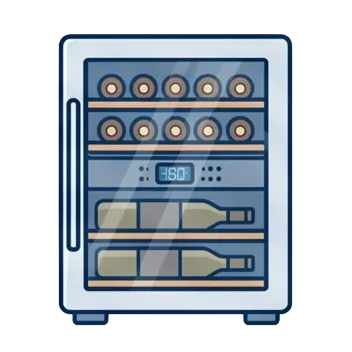
Gaggenau wine cooler problems we see
- A zone that will not hold its setting. Each zone is controlled from its own sensor. A sensor that drifts, a fan that slows or a zone heater that fails can push one zone several degrees off while the display looks normal.
- Fog or water droplets on the glass. Moisture on the inside of the glass means humid air is entering. A gasket that has lost its shape or a door that no longer closes square is the usual cause.
- Water collecting on the cabinet floor. Water from the evaporator has to drain away. A clogged or frozen drain lets it pool on the floor of the cabinet, where it raises humidity and can damage labels.
- New hum, buzz or tick. Wine cabinets are built to run quietly with little vibration. Fan wear, a loose mount, tubing touching a panel, or a cabinet that has moved out of level can all add noise.
- Presentation lighting not working. The interior lighting runs on its own LED circuit. A dark section usually comes down to an LED strip, a connector, the door switch or the lighting supply.
A Vario wine climate cabinet has a narrower job than a refrigerator: it holds each zone steady, keeps humidity moderate, blocks light and keeps vibration down. These are Gaggenau’s built-in wine storage, designed to sit in a column wall next to Gaggenau refrigerators and freezers, with glass doors, presentation lighting and more than one temperature zone. Gaggenau wine cooler repair is about getting them back to that job.
For the full Gaggenau lineup, see our Gaggenau brand page. This page covers the wine cabinets only.
Why wine cabinets fail differently from refrigerators
Narrow targets
A refrigerator that runs two degrees warm for a week rarely causes trouble. A wine cabinet that does the same while showing the right number on its display is failing at its main task. Because the target band is narrow, small sensor errors matter. We see plenty of cabinets where the cooling system is healthy and a zone sensor is simply reading wrong.
Zone control
A multi-zone cabinet keeps zones apart by managing air and heat between them. Depending on the cabinet, that involves fans, dampers or small heaters, each answering to the control and its zone sensors. If one of those parts sticks, its zone drifts while the others carry on normally.
The glass door
The door glass protects against UV light, which can damage wine over time, and it lets you see the collection. Glass insulates less than a solid door, so the gasket and door alignment carry more of the load. A worn gasket shows up quickly as fog on the inside of the glass.
Quiet operation
Vibration is bad for wine aging over long periods, and these cabinets are designed to run with very little of it. A new buzz or tick is worth tracing. It is usually a fan, a mount or something touching that should not be.
What we check on a visit
We start with calibrated probes in each zone, left long enough to settle, and compare them with the display. A mismatch points to a sensor. A real temperature problem sends us to the cooling side.
Next:
- Evaporator and fans. Airflow, frost pattern and fan speed in each zone.
- Condenser. Coil condition and airflow through the grille, which matters in a tight column installation.
- Drain. Whether water from the evaporator is leaving the cabinet.
- Door and gasket. Contact around the full perimeter, and how the door closes.
- Noise sources. Fans, mounts, tubing and leveling.
- Lighting. LED strips, connectors, door switch and supply.
The control’s service routine lets us run fans, heaters and the compressor directly, so we can confirm a part has failed before ordering it. Our wine cooler repair page explains how we handle wine units in general.
What you can check first
- Confirm the zone settings are what you expect.
- Make sure no shelf, bottle or label is holding the door slightly open.
- Keep the grille clear.
- Check for standing water on the cabinet floor and note it.
- Write down each zone’s displayed temperature over a day.
If the cabinet is not cooling at all, our guide to a wine cooler not cooling walks through the safe checks in order.
When Gaggenau wine cooler repair makes sense
Repair is the better choice on almost every Gaggenau wine cabinet. It is fitted into a column wall with matching trim, and replacement means the same fitting work again. Sensors, fans, gaskets, lighting and controls are all moderate repairs. A sealed-system failure on an older cabinet is the one case where we lay out both options in detail before you decide.
How a repair visit works
Call or send a request
We reply within one business hour. We ask what the appliance is doing, the brand and, if handy, the model number from the label inside the door.
Diagnosis in your home
A technician tests the system and finds the actual fault. The visit is $149.
Written quote first
You get the price before any work starts. Go ahead and the $149 is credited toward the repair.
Repair with OEM parts
Common parts are often on the truck. If one has to be ordered, we book the return visit when it arrives. Parts and labor are covered by our warranty.
Frequently asked questions
What does humidity have to do with a wine cabinet repair?
Wine stored for years does best in moderately humid air. Very dry air can shrink corks and let air into the bottle. Very humid air fogs the glass, loosens labels and can encourage mold. When a cabinet starts fogging or collecting water, we look at the gasket, the drain and the zone temperatures, since all three affect humidity inside.
How quickly should I move my wine if a zone goes warm?
A few degrees for a day or two is unlikely to harm most wine. A zone that keeps climbing is different. Move the bottles you care most about to the coolest, darkest spot in the house, away from heat sources and vibration, and keep them lying down. Note the temperature reading so we can see how fast it rose.
Can you repair a Gaggenau wine cabinet without pulling it out?
Most wine repairs, including sensors, fans, gaskets, lighting and controls, are handled with the cabinet in place. Drain work at the back and sealed-system repairs need it slid out of the opening. When that is necessary, we remove the bottles first and protect the surrounding furniture panels and floor.
More on Gaggenau and wine coolers
Book Gaggenau wine cooler repair
Tell us what's going on and we'll call or text you within one business hour (Mon–Sun, 8 AM–8 PM) to set up a time. In a hurry? Call (206) 350-0055 or send a text.
Warm fridge? Let’s get it looked at.
We answer the phone Mon–Sun, 8 AM – 8 PM. Same-day visits are often possible when you call early.